You have performed frequently in Romania since 2015 and have even said that you feel at home in our country. How has your relationship with the Romanian public evolved over time?
I came to Bucharest, as part of the Enescu Festival, in the 2015 edition, and then I returned for the Cluj Musical Autumn, where I presented my project Makedonissimo. After that, I started to return to Romanian stages more often, being honored by the invitation to perform in several cities, in Cluj, in Timișoara (as an artist in residence, a collaboration that is still ongoing) and, of course, several times in Bucharest, where I performed in the company of several orchestras. My last visit was to the Enescu Festival in September, thanks to the invitation of maestro Măcelaru.
In all these years, I have had the opportunity to reconfirm the feeling that the Romanian public, which is closely linked to the Romanian culture, is in some way linked to the culture of my homeland, Macedonia, and I think there could not have been a more natural connection between the two. I am very grateful that the Romanian public, especially in Bucharest - thanks to an important tradition and the opportunities to bring internationally renowned artists - can keep in touch with the latest news of the concert scene in Europe and not only, from all over the globe, especially through the Enescu Festival, but also through the seasons of the Philharmonic Orchestra and the Radio Orchestras that bring important names of the musical world to Bucharest. Therefore, the public can get in touch with these artists and develop their own standards or expectations; all this, together with the education and culture they have acquired throughout history. I can only say that I am happy for the recognition of my art and for all the moments I have experienced together with the music lovers of Aucu, from a musical point of view - on stage, but also off. Every time I return to a Romanian stage has been received with great warmth and kindness and of course this is a great inspiration and motivation for an artist, so I am always happy to return to Romania!
You also have very good relations with Romanian musicians, with many of them becoming friends. During the recital on February 28 at the Romanian Athenaeum, you will perform alongside two Romanian artists. How did the idea of this collaboration come about?
In a very spontaneous way, when I came to the Enescu Festival. It's actually something I do often, I invite someone from the orchestra to sing the encore with me. Even before arriving in Bucharest, I asked for the contact of the concertmaster, Theodor Andreescu, without knowing him beforehand, of course, and his affirmative answer came very quickly. I felt his positivity and I sang the encore for the first time live, right on stage. I think spontaneity is very precious and I really appreciate people who are so open to such proposals. I think this message about unity and friendship that I try to convey to musicians, but also to the audience, is very important in these times that we are living now, and music can help us overcome all these things and can unite us. And after that encore, Theodor was so surprised by what we managed to create together, without any rehearsal, and by my personality, so he proposed a recital to me. I am very grateful for such people! We will be playing with the cellist Alexander Somov, a colleague and dear friend, who is the first cellist of the Strasbourg Philharmonic Orchestra, is from Bulgaria and is part of the quintet of my project, Makedonissimo. He is a fantastic person and musician! And I met Sorin Spasinovici when I collaborated with the European Union Youth Orchestra and this is a new example of a meeting that gives birth to friendships in a very spontaneous way. We were studying in adjacent rooms and, without knowing that he was from Romania, I asked him to play with me and a Bulgarian cellist the encore of that concert, a Macedonian piece. I was amazed by his abilities and by him as a person and since then we have become friends and collaborated several times. We recorded the Brahms Quartet together during the pandemic, the album being called "Friendship" because it was made in very difficult conditions, then several artists came from different countries to Macedonia especially for that recording session. So I'm glad I have the chance to sing with him for the first time in his country.
How important is chamber music in your work?
Chamber music means friendship, and when you play with the same band members for a long time, it's like being in a family! And sharing emotions with others is the most beautiful and natural thing in people's lives, and musicians in particular. Unfortunately, I don't have the opportunity to play chamber music as much as I would like, so I respond positively to the opportunities that arise because, of course, it's a rich and very beautiful repertoire, and then, if you have other musicians with whom you get along very naturally, it's a real joy! It's actually like a revelation! It also occupies a very special place in my musical activity, and this may also explain why I prefer to play concert works more than solo recitals. Playing with an orchestra is a different kind of chamber music, or at least, this is my approach to this repertoire and my type of musical personality, and every time I play with an orchestra, the audience can feel this.

The festival offers another intriguing performance on October 21 at Hong Kong City Hall that blends traditional Macedonian folk songs with influences of jazz, Chinese music – and Cantopop.
The quintet of musicians who make up Makedonissimo, led by pianist Simon Trpčeski, will play their signature blend of emotional and exuberant folk music with jazz and classical elements. Later, they will perform a specially created segment featuring traditional Macedonian tunes, Cantopop and Chinese music alongside Hong Kong Chinese Orchestra’s suona (trumpet-like) principal Ma Wai-him and (stringed) huqin player Chan Pik-sum, with Hong Kong Cantopop composer Johnny Yim arranging two medleys for the segment.
The idea for the collaboration came about from conversations between Trpčeski and the Asia+ Festival organisers.
“As an ensemble, we are open to embracing the world with the music,” he says. “So I suggested that we can make a blend and collaborate with local artists, local tunes. Because this was the idea also of the [Makedonissimo] project. And we have absolutely shown respect to many different people from many different cultures, wherever we went. And we saw the reaction and we can see the power of the music.”
The other members of the quintet are Hidan Mamudov on clarinet, alto saxophone and kaval (a traditional Balkan flute), the violinist Aleksandar Krapovski, cellist Alexander Somov and percussionist Vlatko Nushev.
Even though Macedonian folk music, Cantopop and traditional Chinese music and instruments may not initially seem to share many similarities, music has the power to cross boundaries and passionate musicians, including members of Makedonissimo, are eager to explore new forms and put their own twist on it.
Nushev, for example, performed with some traditional Korean percussion instruments when the group took part in the Music at PyeongChang classical music festival in South Korea.
Krapovski says he sees similarities between the violin and Chinese stringed instruments. “Music is universal so we always find bridges between [Asia] and Southeastern parts of Europe,” he says. “And there are certain intonations and things that we actually find in common as well.”
Mamudov adds: “In our Balkan music, there is actually a lot of Oriental influence.”
Somov, who is originally from Bulgaria, says he finds adapting to different types of music as a member of Makedonissimo to be an enriching experience.
“We are all classically trained but we are also exploring different techniques; we are exploring different approaches to the music,” he says. “Whether it be with [instruments] we wouldn’t usually use or techniques that we wouldn’t usually use in our classical performance. It’s like learning a new language and it can be very meaningful.”
Trpčeski says Macedonian folk music is emotional and can be seen as a symbol of life. “This is music that connects people, brings people together. It is music that is used at people’s gatherings, at people’s weddings,” he says. “So there is a lot of love, a lot of sorrow, a lot of passion, a lot of happiness also.”
Makedonissimo gives folk music the classical treatment at the hands of the five musicians, with Trpčeski calling it “highly sophisticated chamber music”.
“And with the universal language of music, it’s quite a unique and effective way to showcase Macedonian culture to people in Hong Kong. And to make the world a little bit smaller through the concert,” he says.
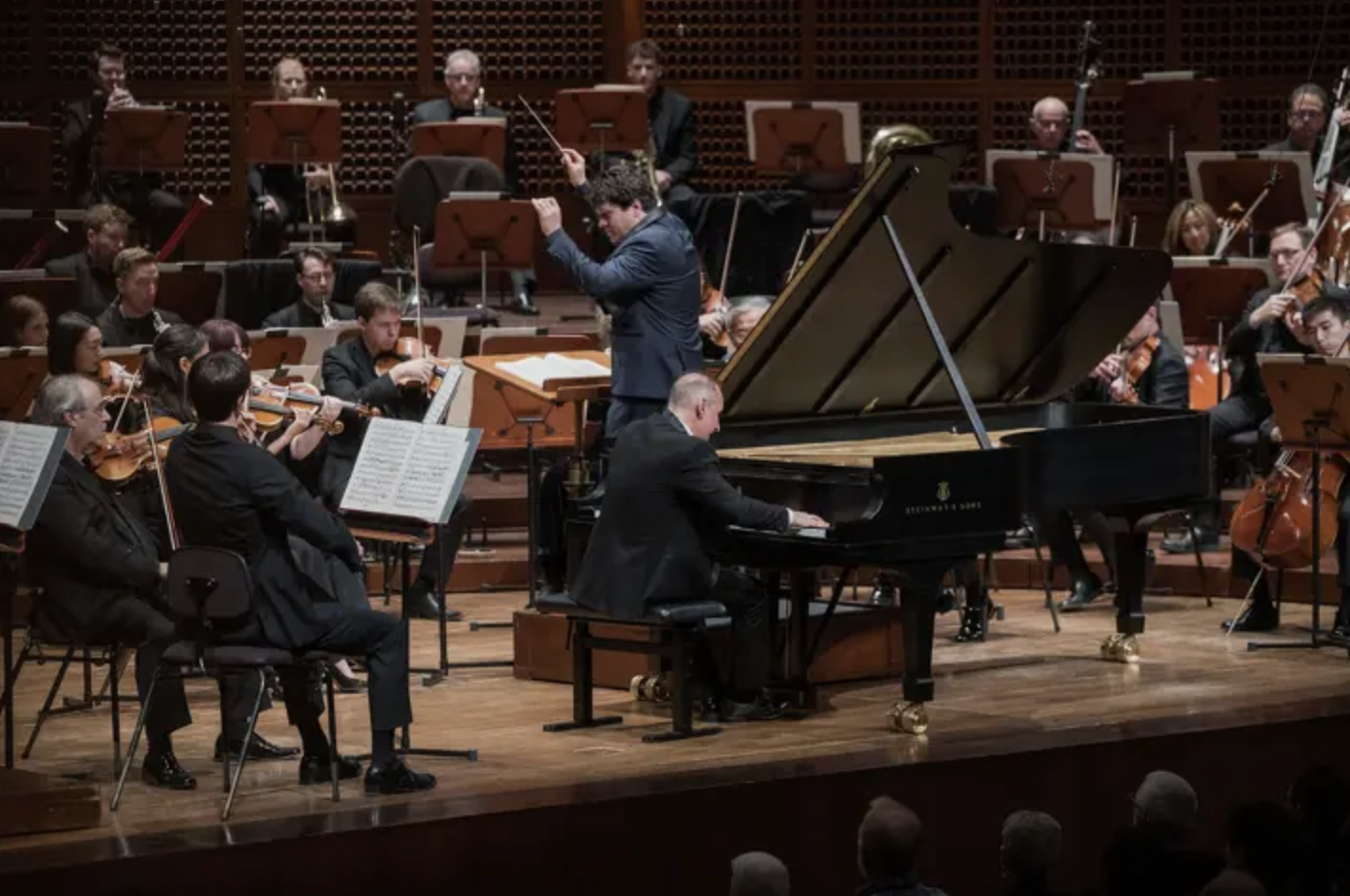
Simon Trpčeski began his recital with Beethoven's 12 Variations on a Russian Dance from "Das Waldm ädchen" in A major, WoO 71. He immediately struck with his concise touch, the nuances of which were clearly audible throughout the hall. With a beautiful touch, he presented this relatively unknown music alternately playful and lyrical. The pianist approached this fairly early work from the perspective of Haydn and Mozart, placing less emphasis on the capriciousness and roughness so typical of Beethoven's later style.
He continued with October from Tchaikovsky's Seasons, Opus 37a. He performed it beautifully, although a slightly slower tempo would have emphasized its nostalgia even more. The Dumka opus 59 is one of the most pianistic pieces by this composer and it was played firmly and with a serious tone at the end.
Lastly, the 32 Variations in C minor on a unique theme, Beethoven's WoO 80, also belong to his better-known variation cycles. Here, the unruly composer, so familiar from his later sonatas, is much more evident. Trpčeski played these with presence and, incidentally, demonstrated how perfectly the new Steinway grand piano he was unveiling that evening was tuned.
The Macedonian pianist possesses a remarkable technical prowess, which is reflected in his impeccable playing. Nevertheless, I wasn't entirely won over before the intermission, perhaps because his playing had sometimes sounded a little too "neat." I felt the same way about his rendition of Ravel's Valses nobles et sentimentales . Here, again, the playing was impeccable, alternately firm and subtle, but not overly sensual. The overall tone remained somewhat earthy, which was a shame, because this pianist possesses the kind of subtle touch that can work wonders in this hyper-sensitive music. Despite these minor quibbles, the Epilogue sounded beautiful.
In the final work on the program, a Suite from The Nutcracker, arranged for piano by Mikhail Pletnev, the pianist was clearly in his element. This was possibly also due to Tchaikovsky's infallible music, which held its own in this arrangement. The March of the Tin Soldiers sounded immediately virtuosic, while the well-known Dance of the Sugar Plum Fairy once again worked its magic. In the Tarantella , the pianist's playing was strikingly clear, allowing you to hear every detail, and the Intermezzo – A Pine Forest in Winter – sounded almost as refined as Pletnev himself plays it. The audience nearly applauded after each movement. In the final section, Andante maestoso (Pas de deux), the pianist's playing was evocative.
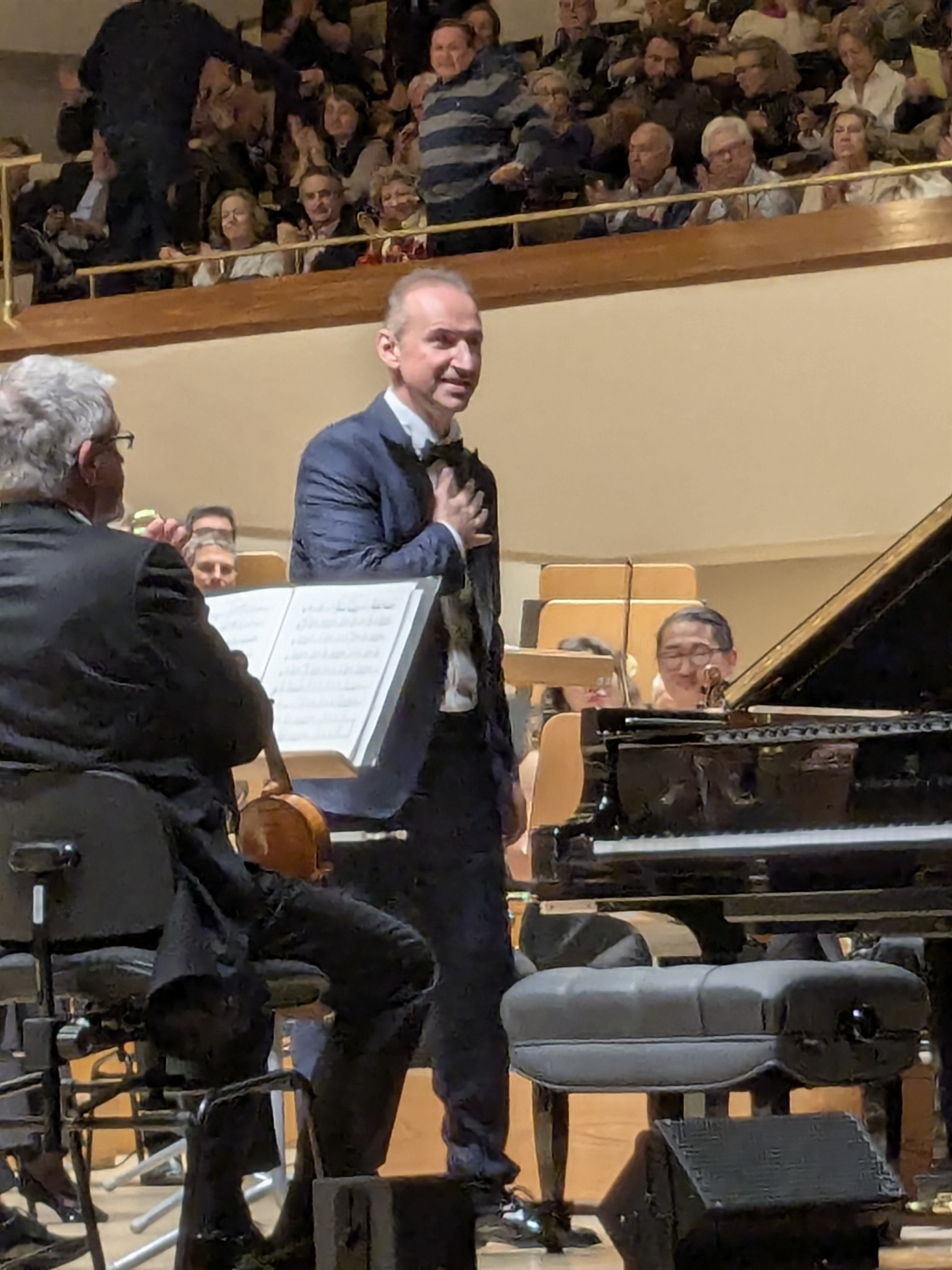
Loud applause followed, after which Trpceski sat down at the piano and exclaimed loudly , "I am thinking of what to play." Indeed, you just have to have the right encore ready, even while you're still high on adrenaline. In his brief explanation, he mentioned the legendary pianist Shura Cherkassky, who supposedly said that the 32 steps of the staircase were "the loneliest you could imagine." It was fitting that he mentioned his famous colleague, because the first encore, Poulenc's Hommage à Edith Piaf, wouldn't have been out of place at a Cherkassky recital (whose encores remained the absolute highlight of his recitals!). With the second encore, the Precipitato from Prokofiev's 7th Sonata, "the fire was clearly unleashed." And these are, in fact, the moments you kind of wait for: unbridled momentum, passion, fury, and virtuosity. It was all there in this rapidly played movement, as was its sardonic character. Trpceski's ingenuity was in maintaining the fast tempo while also preserving the clarity of his playing. Fortunately, it didn't degenerate into a breathless gallop with many dropped notes. He concluded with a composition by his analysis teacher (whose name I didn't catch), which, after a quiet beginning, ended with a frenetic finish. Trpceski then gave a beautiful fourth encore of "Villa Lobos," which he spontaneously and unexpectedly dedicated to an emotional Marco Riaskoff of the long-successful "Master Pianists" series, in which the pianist has performed several times.

Grieg’s concerto, with the sensitive Macedonian pianist Simon Trpčeski at the keyboard, proved the crowd-pleaser it was intended to be, but Mr. Trpčeski’s interpretation eschewed light and bright for darker and more interesting hues. And though he can, and does, play dazzlingly fast, he just as often favors a slower pace, bringing a tantalizing melancholy to these familiar strains. Ms. Zhang obliged him, to everyone’s benefit.

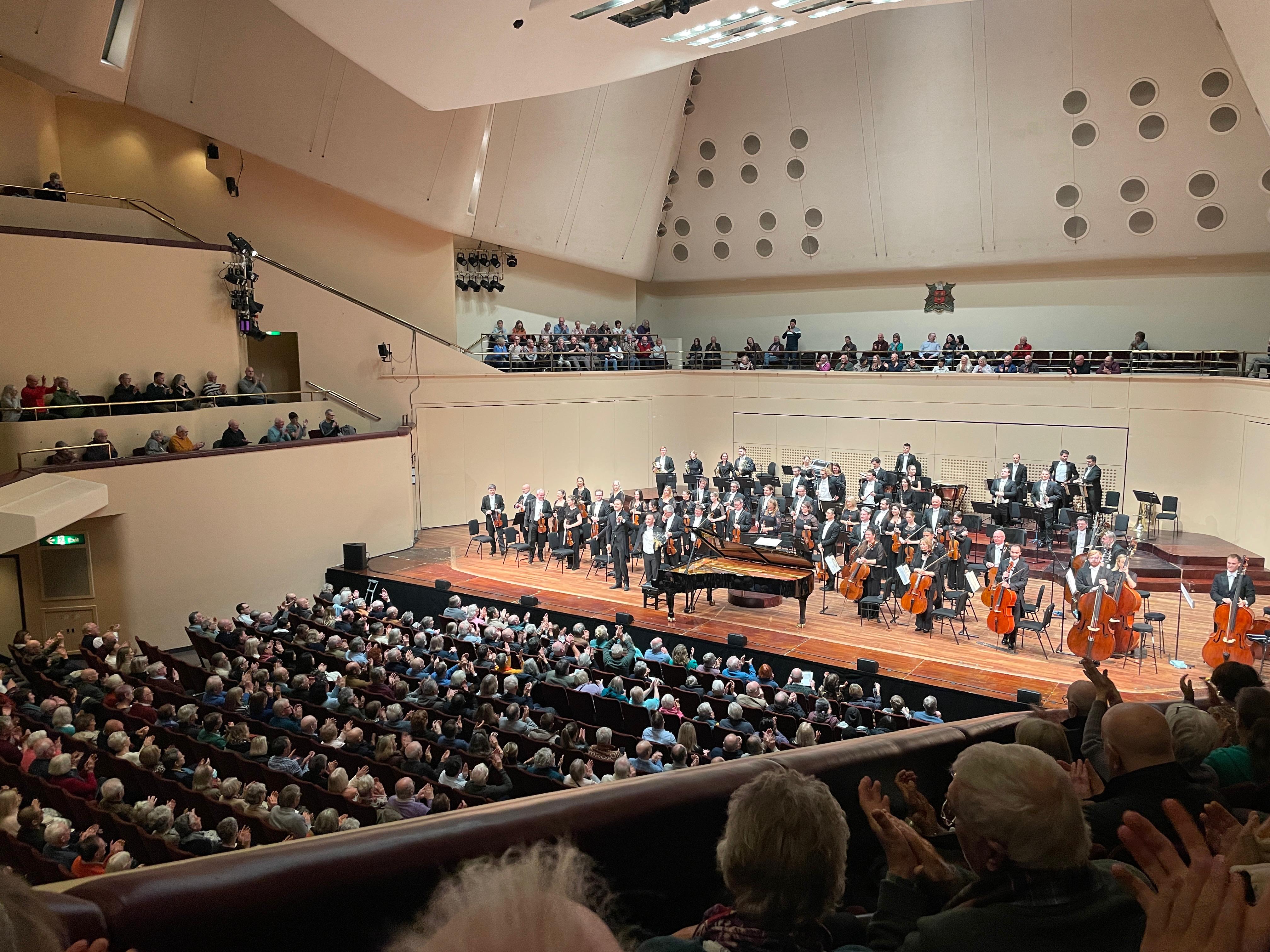
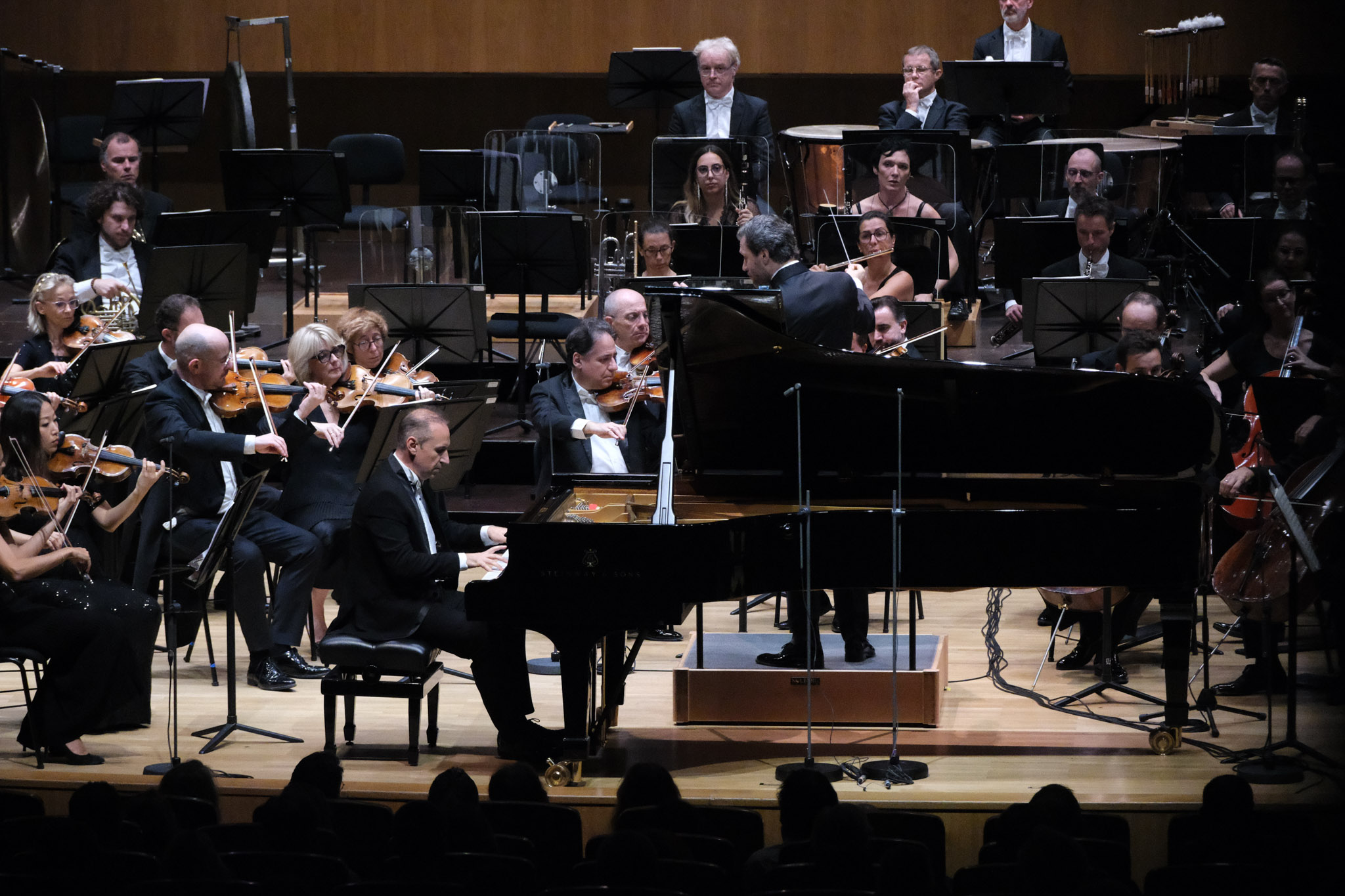
A timpani roll, and dramatic descending chords from pianist Simon Trpčeski, had audience members holding their breath in rapt anticipation. Trpčeski, known for his charismatic stage presence, delivered an electric performance, his fingers dancing across the keys. He was also not afraid to draw out pauses during his solos, adding suspenseful flair to his heroic intensity. Such artistry earned him a standing ovation well over a minute long.

The highlight of the evening was Saint-Saëns Piano Concerto No.5 performed by Simon Trpčeski, one of the most interesting contemporary pianists. He chose the Petrof 275 concert grand piano for his performance in the Rudolfinum, and wonderfully leveraged the unique color properties of the instrument. Trpčeski is known for his ability to quickly establish a warm rapport with the audience, which he demonstrated in the Rudolfinum. The audience showed their appreciation for the soloist and the orchestra with thunderous applause. For one of his encores, he performed the 3rd movement from Prokofiev' Sonata No. 7 — the performance was so electrifying that it lifted the audience from their seats.

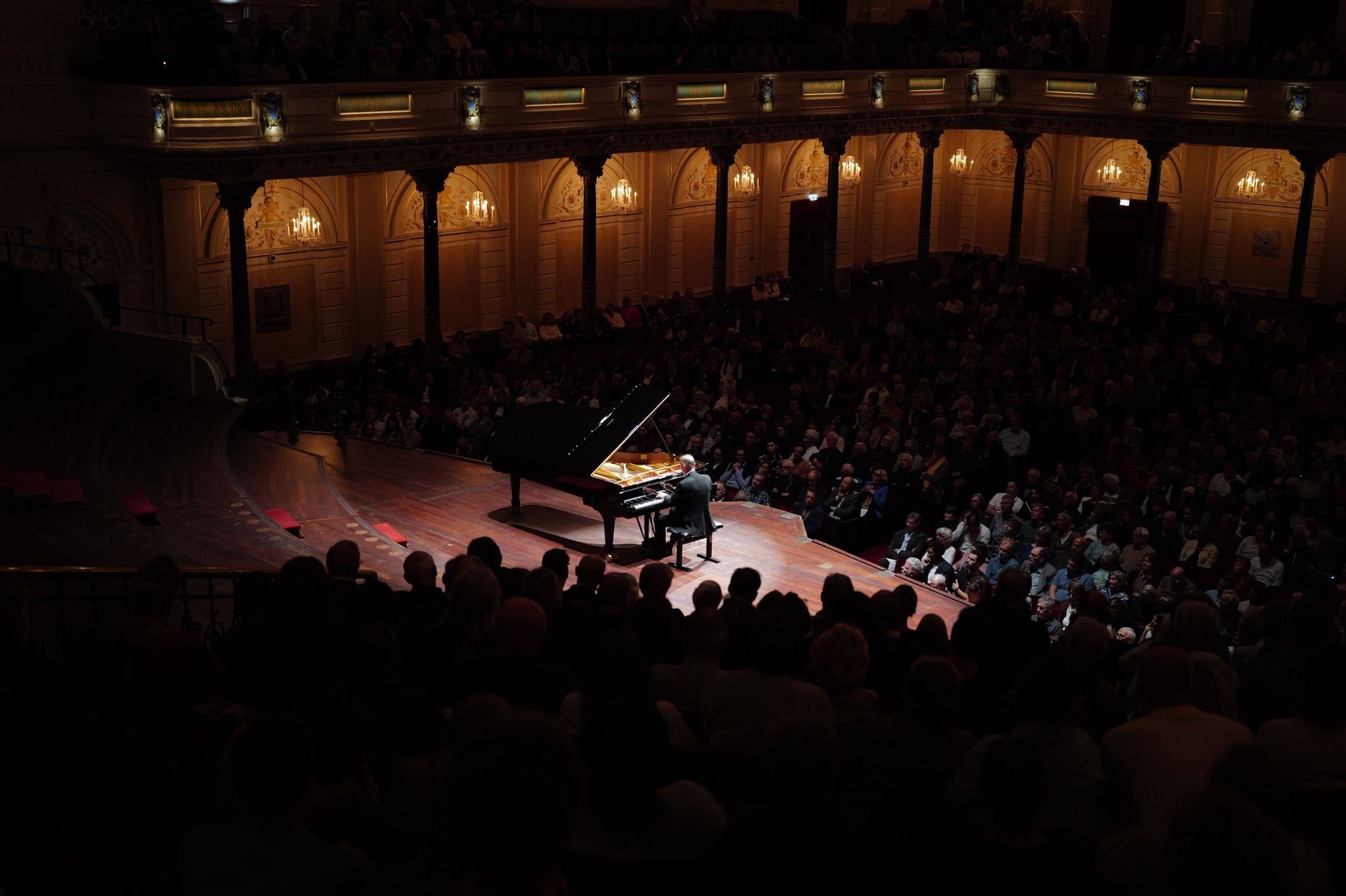
Simon Trpčeski opens the season's Great Pianists series at the Concertgebouw: "It's not only an honor, but also a great responsibility." He shares insight into the inspirations that are the basis of his life as a concert artist, context about the works he will perform in the recital, and his commitment to building cultural bridges through music.

In this interview, Simon Trpčeski discusses Saint-Saëns Piano Concerto No.5 "Egyptian" which he will perform with the Prague Philharmonia and conductor Emmanuel Villaume on September 4, 2025. In this interview, he shares insight into the life of a busy concert artist, his approach to music, performing for the Czech audience, working with the next generation of artists, and his love for Macedonian folk music.

On September 4, 2025, the Prague Philharmonia Orchestra will open its season in the Dvořák Hall of the Rudolfinum with Simon Trpčeski performing the Saint-Saëns' "Egyptian Concerto" No. 5. In this interview, Trpčeski discusses historical context of the work, his experience with the Czech audiences, his broad repertoire and interpretive approach, MAKEDONISSIMO and his cultural heritage, and his mission as an artist.

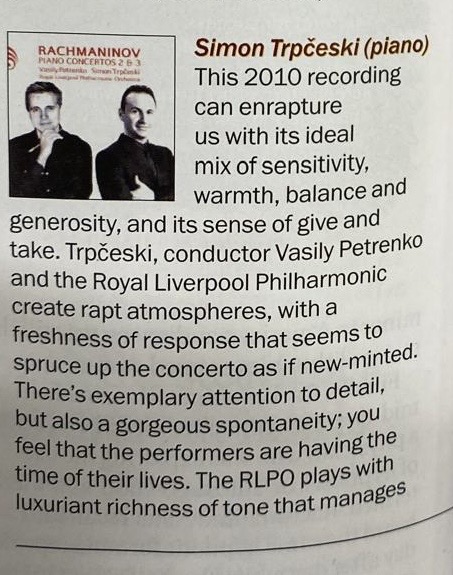
The concert series kicked off with a recital on July 13, after which for three evenings (from July 17 to 19) as a soloist with the São Paulo Symphony Orchestra, under the baton of the celebrated maestro Vasily Petrenko, Trpčeski performed Tchaikovsky's Piano Concerto No. 1. The Brazilian audience greeted each performance with ovations, and a real curiosity for the Macedonian flags in the audience. Trpčeski responded to the warm reception with encore performances of Villa Lobos, Bužarovski, and excerpts from "Makedonissimo." The concerts were supported by the President of the Macedonian-Brazilian Chamber of Commerce, Luis del Valle.

The Budva audience welcomed the concert with enthusiasm and expressed great respect for the performers, which resulted in the performance of two encores, with standing ovations and strong emotions that rounded off an exceptional musical evening. Trpčeski said after the concert that a natural and spontaneous audience is always a gift for an artist. "This is not a classical project, it should be spontaneous. As you saw, I'm also in a role narrator and that is the point of the "MAKEDONISSIMO" project - to really embrace people through music," said Trpčeski and added that he was grateful to the Grad Teatar festival. "Thank you for inviting us, for giving us this honor to open the music program of this year's festival. We hope that our collaboration will continue."